HMS Vanguard

HMS Vanguard was a British fast battleship built during the Second World War and commissioned afterwards.

She was the biggest and fastest of the Royal Navy‘s battleships, the only ship of her class, and the last battleship to be built.

The Royal Navy anticipated being outnumbered by the combined German and Japanese battleships in the early 1940s, and had therefore started building the Lion-class battleships. However, the time-consuming construction of the triple-16-inch turrets for the Lion-class would delay their completion until 1943 at the earliest.

The British had enough 15-inch (381 mm) guns and turrets in storage to allow one ship of a modified Lion-class design with four twin-15-inch turrets to be completed faster than the Lion-class vessels that had already been laid down.

Work on Vanguard was started and stopped several times during the war, and her design was revised several times during her construction to reflect war experience.

These stoppages and changes prevented her from being completed before the end of the war.

Vanguards first task after completing her sea trial at the end of 1946 was, early the next year, to convey King George VI and his family on the first Royal Tour of South Africa by a reigning monarch. 

While refitting after her return, she was selected for another Royal Tour of Australia and New Zealand in 1948.

This was cancelled due to King George’s declining health and Vanguard briefly became flagship of the Mediterranean Fleet in early 1949.

After her return home in mid-1949, she became flagship of the Home Fleet Training Squadron. Throughout her career, the battleship usually served as the flagship of any unit to which she was assigned. During the early 1950s, Vanguard was involved in a number of training exercises with NATO forces.

In 1953 she participated in Queen Elizabeth II‘s Coronation Review. While she was refitting in 1955, the Admiralty announced that the ship was going to be put into reserve upon completion of the work. Vanguard was sold for scrap and was broken up beginning in 1960.

German Junkers Ju 87 Stuka Dive Bomber

The Junkers Ju 87 or Stuka (from Sturzkampfflugzeug, “dive bomber“) was a German dive bomber and ground-attack aircraft. Designed by Hermann Pohlmann, it first flew in 1935. 

The Ju 87 made its combat debut in 1937 with the Luftwaffe‘s Condor Legion during the Spanish Civil War and served the Axis forces in World War II.

The aircraft is easily recognisable by its inverted gull wings and fixed spatted undercarriage. Upon the leading edges of its faired main gear legs were mounted the Jericho-Trompete (Jericho trumpet) wailing sirens, becoming the propaganda symbol of German air power and the so-called Blitzkrieg victories of 1939–1942. 

The Stuka’s design included several innovations, including automatic pull-up dive brakes under both wings to ensure that the aircraft recovered from its attack dive even if the pilot blacked out from the high g-forces.

The Ju 87 operated with considerable success in close air support and anti-shipping at the outbreak of World War II. 

It led air assaults in the invasion of Poland in September 1939. 

Stukas were critical to the rapid conquest of Norway, the NetherlandsBelgium and France in 1940. 

Though sturdy, accurate, and very effective against ground targets, the Stuka was, like many other dive bombers of the period, vulnerable to fighter aircraft. 

During the Battle of Britain, its lack of manoeuvrability, speed and defensive armament meant that it required a heavy fighter escort to operate effectively.

After the Battle of Britain, the Stuka was used in the Balkans Campaign, the African and Mediterranean theatres and the early stages of the Eastern Front, where it was used for general ground support, as an effective specialised anti-tank aircraft and in an anti-shipping role. 

Once the Luftwaffe lost air superiority, the Stuka became an easy target for enemy fighter aircraft. 

It was produced until 1944 for lack of a better replacement. 

By 1945 ground-attack versions of the Focke-Wulf Fw 190 had largely replaced the Ju 87, but it remained in service until the end of the war.

An estimated 6,500 Ju 87s of all versions were built between 1936 and August 1944.

Oberst Hans-Ulrich Rudel was the most successful Stuka pilot and the most highly decorated German serviceman of the Second World War.


Messerschmitt Bf 109

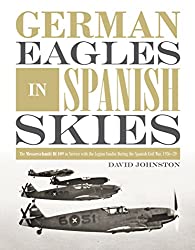
The Messerschmitt Bf 109 is a German World War II fighter aircraft that was, along with the Focke-Wulf Fw 190, the backbone of the Luftwaffe‘s fighter force. 

The Bf 109 first saw operational service in 1937 during the Spanish Civil War and was still in service at the dawn of the jet age at the end of World War II in 1945. 

It was one of the most advanced fighters when it first appeared, with an all-metal monocoque construction, a closed canopy, and retractable landing gear. It was powered by a liquid-cooled, inverted-V12 aero engine

From the end of 1941, the Bf 109 was steadily supplanted by the Focke-Wulf Fw 190

It was called the Me 109 by Allied aircrew and some German aces, even though this was not the official German designation.

It was designed by Willy Messerschmitt and Robert Lusser who worked at Bayerische Flugzeugwerke during the early to mid-1930s. 

It was conceived as an interceptor, although later models were developed to fulfill multiple tasks, serving as bomber escortfighter-bomberday-, night-, all-weather fighterground-attack aircraft, and reconnaissance aircraft

It was supplied to several states during World War II, and served with several countries for many years after the war. 

The Bf 109 is the most produced fighter aircraft in history, with a total of 33,984 airframes produced from 1936 to April 1945. 

Some of the Bf 109 production took place in Nazi concentration camps through slave labor.

The Bf 109 was flown by the three top-scoring fighter aces of all time, who claimed 928 victories among them while flying with Jagdgeschwader 52, mainly on the Eastern Front

The highest-scoring, Erich Hartmann, was credited with 352 victories. The aircraft was also flown by Hans-Joachim Marseille, the highest-scoring ace in the North African Campaign who shot down 158 enemy aircraft (in about a third of the time). 

It was also flown by many aces from other Axis nations, notably the Finn Ilmari Juutilainen, the highest-scoring non-German ace. 

Pilots from Italy, Romania, Croatia, Bulgaria, and Hungary also flew the Bf 109. Through constant development, the Bf 109 remained competitive with the latest Allied fighter aircraft until the end of the war.

Hawker Hurricane

The Hawker Hurricane

The Hawker Hurricane is a British single-seat fighter aircraft of the 1930s–40s that was designed and predominantly built by Hawker Aircraft Ltd. for service with the Royal Air Force (RAF).

It was overshadowed in the public consciousness by the Supermarine Spitfire’s role during Battle of Britain in 1940, but the Hurricane inflicted 60 percent of the losses sustained by the Luftwaffe in the engagement, and fought in all the major theatres of the Second World War.

The Hurricane originated from discussions between RAF officials and aircraft designer Sir Sydney Camm about a proposed monoplane derivative of the Hawker Fury biplane in the early 1930s.

Despite an institutional preference for biplanes and lack of interest from the Air Ministry, Hawker refined their monoplane proposal, incorporating several innovations which became critical to wartime fighter aircraft, including retractable landing gear and the more powerful Rolls-Royce Merlin engine.

The Air Ministry ordered Hawker’s Interceptor Monoplane in late 1934, and the prototype Hurricane K5083 performed its maiden flight on 6 November 1935.

In June 1936, the Hurricane went into production for the Air Ministry; it entered squadron service on 25 December 1937.

Its manufacture and maintenance was eased by using conventional construction methods so that squadrons could perform many major repairs without external support.

The Hurricane was rapidly procured prior to the outbreak of the Second World War in September 1939, when the RAF had 18 Hurricane-equipped squadrons in service.

The aircraft was relied on to defend against German aircraft operated by the Luftwaffe, including dogfighting with Messerschmitt Bf 109s in multiple theatres of action.

The Hurricane was developed through several versions, into bomber-interceptors, fighter-bombers, and ground support aircraft as well as fighters.

Versions designed for the Royal Navy known as the Sea Hurricane had modifications enabling operation from ships. Some were converted as catapult-launched convoy escorts.

By the end of production in July 1944, 14,487 Hurricanes had been completed in Britain, Canada, Belgium and Yugoslavia.

Avro Lancaster Bomber

The Avro Lancaster is a British Second World War heavy bomber.

It was designed and manufactured by Avro as a contemporary of the Handley Page Halifax, both bombers having been developed to the same specification, as well as the Short Stirling, all three aircraft being four-engined heavy bombers adopted by the Royal Air Force (RAF) during the same wartime era.

The Lancaster has its origins in the twin-engine Avro Manchester which had been developed during the late 1930s in response to the Air Ministry Specification P.13/36 for a capable medium bomber for “world-wide use”.

Originally developed as an evolution of the Manchester (which had proved troublesome in service and was retired in 1942), the Lancaster was designed by Roy Chadwick and powered by four Rolls-Royce Merlins and in one version, Bristol Hercules engines.

It first saw service with RAF Bomber Command in 1942 and as the strategic bombing offensive over Europe gathered momentum, it was the main aircraft for the night-time bombing campaigns that followed.

As increasing numbers of the type were produced, it became the principal heavy bomber used by the RAF, the RCAF and squadrons from other Commonwealth and European countries serving within the RAF, overshadowing the Halifax and Stirling.

A long, unobstructed bomb bay meant that the Lancaster could take the largest bombs used by the RAF, including the 4,000 lb (1,800 kg), 8,000 lb (3,600 kg) and 12,000 lb (5,400 kg) blockbusters, loads often supplemented with smaller bombs or incendiaries.

The “Lanc”, as it was known colloquially became one of the most heavily used of the Second World War night bombers, “delivering 608,612 long tons of bombs in 156,000 sorties”.

The versatility of the Lancaster was such that it was chosen to equip 617 Squadron and was modified to carry the Upkeep “Bouncing bomb” designed by Barnes Wallis for Operation Chastise, the attack on German Ruhr valley dams.

Although the Lancaster was primarily a night bomber, it excelled in many other roles, including daylight precision bombing, for which some Lancasters were adapted to carry the 12,000 lb (5,400 kg)

Tallboy and then the 22,000 lb (10,000 kg) Grand Slam earthquake bombs (also designed by Wallis). This was the largest payload of any bomber in the war.

In 1943, a Lancaster was converted to become an engine test bed for the Metropolitan-Vickers F.2 turbojet.

Lancasters were later used to test other engines, including the Armstrong Siddeley Mamba and Rolls-Royce Dart turboprops and the Avro Canada Orenda and STAL Dovern turbojets.

Postwar, the Lancaster was supplanted as the main strategic bomber of the RAF by the Avro Lincoln, a larger version of the Lancaster.

The Lancaster took on the role of long range anti-submarine patrol aircraft (later supplanted by the Avro Shackleton) and air-sea rescue.

It was also used for photo-reconnaissance and aerial mapping, as a flying tanker for aerial refuelling and as the Avro Lancastrian, a long-range, high-speed, transatlantic passenger and postal delivery airliner.

In March 1946, a Lancastrian of BSAA flew the first scheduled flight from the new London Heathrow Airport.
The Spitfire

The British Spitfire

The Supermarine Spitfire is a British single-seat fighter aircraft that was used by the Royal Air Force and other Allied countries before, during, and after World War II.

Many variants of the Spitfire were built, using several wing configurations, and it was produced in greater numbers than any other British aircraft.

It was also the only British fighter produced continuously throughout the war. The Spitfire continues to be popular among enthusiasts; nearly 60 remain airworthy, and many more are static exhibits in aviation museums throughout the world.

The Spitfire was designed as a short-range, high-performance interceptor aircraft by R. J. Mitchell, chief designer at Supermarine Aviation Works, which operated as a subsidiary of Vickers-Armstrong from 1928. Mitchell pushed the Spitfire’s distinctive elliptical wing with cutting-edge sunken rivets (designed by Beverley Shenstone) to have the thinnest possible cross-section, helping give the aircraft a higher top speed than several contemporary fighters, including the Hawker Hurricane.

Mitchell continued to refine the design until his death in 1937, whereupon his colleague Joseph Smith took over as chief designer, overseeing the Spitfire’s development through its multitude of variants. 

During the Battle of Britain, from July to October 1940, the public perceived the Spitfire to be the main RAF fighter, though the more numerous Hurricane shouldered a greater proportion of the burden against Nazi Germany’s air force, the Luftwaffe. 

However, Spitfire units had a lower attrition rate and a higher victory-to-loss ratio than those flying Hurricanes because of the Spitfire’s higher performance. 

During the battle, Spitfires were generally tasked with engaging Luftwaffe fighters—mainly Messerschmitt Bf 109E-series aircraft, which were a close match for them. After the Battle of Britain, the Spitfire superseded the Hurricane to become the backbone of RAF Fighter Command, and saw action in the European, Mediterranean, Pacific, and South-East Asian theatres.

Much loved by its pilots, the Spitfire served in several roles, including interceptor, photo-reconnaissance, fighter-bomber, and trainer, and it continued to serve in these roles until the 1950s.

The Seafire was a carrier-based adaptation of the Spitfire that served in the Fleet Air Arm from 1942 through to the mid-1950s. 

Although the original airframe was designed to be powered by a Rolls-Royce Merlin engine producing 1,030 hp (768 kW), it was strong enough and adaptable enough to use increasingly powerful Merlins and, in later marks, Rolls-Royce Griffon engines producing up to 2,340 hp (1,745 kW). As a result, the Spitfire’s performance and capabilities improved over the course of  its service.

Invasion of Poland

Invasion of Poland

The invasion of Poland (September campaign, Polish: Kampania wrześniowa, 1939 defensive war, Polish: Wojna obronna 1939 roku, Poland campaign, German: Polenfeldzug), marked the beginning of World War II.

The German invasion began on 1 September 1939, one week after the signing of the Molotov–Ribbentrop Pact between Germany and the Soviet Union, and one day after the Supreme Soviet of the Soviet Union had approved the pact.

The Soviets invaded Poland on 17 September.

The campaign ended on 6 October with Germany and the Soviet Union dividing and annexing the whole of Poland under the terms of the German–Soviet Frontier Treaty.

German forces invaded Poland from the north, south, and west the morning after the Gleiwitz incident.

Slovak military forces advanced alongside the Germans in northern Slovakia.

As the Wehrmacht advanced, Polish forces withdrew from their forward bases of operation close to the Germany–Poland border to more established defense lines to the east.

After the mid-September Polish defeat in the Battle of the Bzura, the Germans gained an undisputed advantage.

Polish forces then withdrew to the southeast where they prepared for a long defence of the Romanian Bridgehead and awaited expected support and relief from France and the United Kingdom.

Those two countries had pacts with Poland and had declared war on Germany on 3 September; in the end their aid to Poland was very limited, however France invaded a small part of Germany in the Saar Offensive.

On 17 September, the Soviet Red Army invaded Eastern Poland, the territory beyond the Curzon Line that fell into the Soviet “sphere of influence” according to the secret protocol of the Molotov–Ribbentrop Pact; this rendered the Polish plan of defence obsolete.

Facing a second front, the Polish government concluded the defence of the Romanian Bridgehead was no longer feasible and ordered an emergency evacuation of all troops to neutral Romania.

On 6 October, following the Polish defeat at the Battle of Kock, German and Soviet forces gained full control over Poland.

The success of the invasion marked the end of the Second Polish Republic, though Poland never formally surrendered.

On 8 October, after an initial period of military administration, Germany directly annexed western Poland and the former Free City of Danzig and placed the remaining block of territory under the administration of the newly established General Government.

The Soviet Union incorporated its newly acquired areas into its constituent Byelorussian and Ukrainian republics, and immediately started a campaign of Sovietization. In the aftermath of the invasion, a collective of underground resistance organizations formed the Polish Underground State within the territory of the former Polish state.

Many of the military exiles that managed to escape Poland subsequently joined the Polish Armed Forces in the West, an armed force loyal to the Polish government-in-exile.

French Navy

From the start of World War II, the Navy was involved in a number of operations, participating in the Battle of the Atlantic, the Norwegian Campaign, the Dunkirk evacuation and, briefly, the Battle of the Mediterranean

However, after the fall of France in June 1940, the Navy was obligated to remain neutral under the terms of the armistice that created the truncated state of Vichy France

Worldwide, some 100 naval vessels and their crews heeded General Charles de Gaulle‘s call to join forces with the British, but the bulk of the fleet, including all its capital ships, transferred loyalty to Vichy. 

Concerned that the German Navy might somehow gain control of the ships, the British mounted an attack on Mers-el-Kébir, the Algerian city where many of them were harbored. 

The incident poisoned Anglo-French relations, leading to Vichy reprisals and a full-scale naval battle at Casablanca in 1942 when the Allies invaded French North Africa

But the confrontations were set aside once the Germans occupied Vichy France

The capital ships were a primary goal of the occupation, but before they could be seized they were scuttled by their own crews

A few small ships and submarines managed to escape in time, and these joined de Gaulle’s Free French Naval Forces, an arm of Free France that fought as an adjunct of the Royal Navy until the end of the war. 

In the Pacific theatre as well, Free French vessels operated until the Japanese capitulation; Richelieu was present at the Japanese Instrument of Surrender.

The Navy later provided fire support and troop transport in the Indochina War, the Algerian War, the Gulf War, and the Kosovo War.

French Army

From 1939 until 1940, the French Third Republic was at war with Germany. 

The period from 1940 until 1945 saw competition between Vichy France and the Free French Forces under General Charles de Gaulle for control of the overseas empire. 

In 1944, after the landings of the Allies in France (Normandy, Provence), they expelled the German Army, putting an end to the Vichy Regime.

France and Britain declared war on Germany when Germany invaded Poland in September 1939. After the Phoney War from 1939 to 1940, within seven weeks, the Germans invaded and defeated France and forced the British off the continent. France formally surrendered to Germany.

In August 1943, the de Gaulle and Giraud forces merged in a single chain of command subordinated to Anglo-American leadership, meanwhile opposing French forces on the Eastern Front were subordinated to Soviet or German leaderships. This in-exile French force together with the French Forces of the Interior (FFI) played a variable-scale role in the eventual liberation of France by the Western Allies and the defeat of Vichy France, Fascist ItalyNazi Germany, and the Japanese empire

Vichy France fought for control over the French overseas empire with the Free French forces, which were helped by Britain and the U.S. By 1943, all of the colonies, except for Indochina, had joined the Free French cause.

The number of Free French troops grew with Allied success in North Africa and subsequent rallying of the Army of Africa which pursued the fight against the Axis fighting in many campaigns and eventually invading Italy, occupied France and Germany from 1944 to 1945 by demanding unconditional surrender to the Axis Powers in the Casablanca Conference

On October 23, 1944, Britain, the United States, and the Soviet Union officially recognized de Gaulle’s regime as the Provisional Government of the French Republic (GPRF) which replaced the in-exile Vichy French State (its government having fled to Sigmaringen in western Germany) and preceded the Fourth Republic (1946).

Recruitment in liberated France led to enlargements of the French armies. By the end of the war in Europe in May 1945, France had 1,250,000 troops, 10 divisions of which were fighting in Germany. 

An expeditionary corps was created to liberate French Indochina then occupied by the Japanese. During the course of the war, French military losses totaled 212,000 dead, of which 92,000 were killed through the end of the campaign of 1940, 58,000 from 1940 to 1945 in other campaigns, 24,000 lost while serving in the French resistance, and a further 38,000 lost while serving with the German Army (including 32,000 “malgré-nous“).